

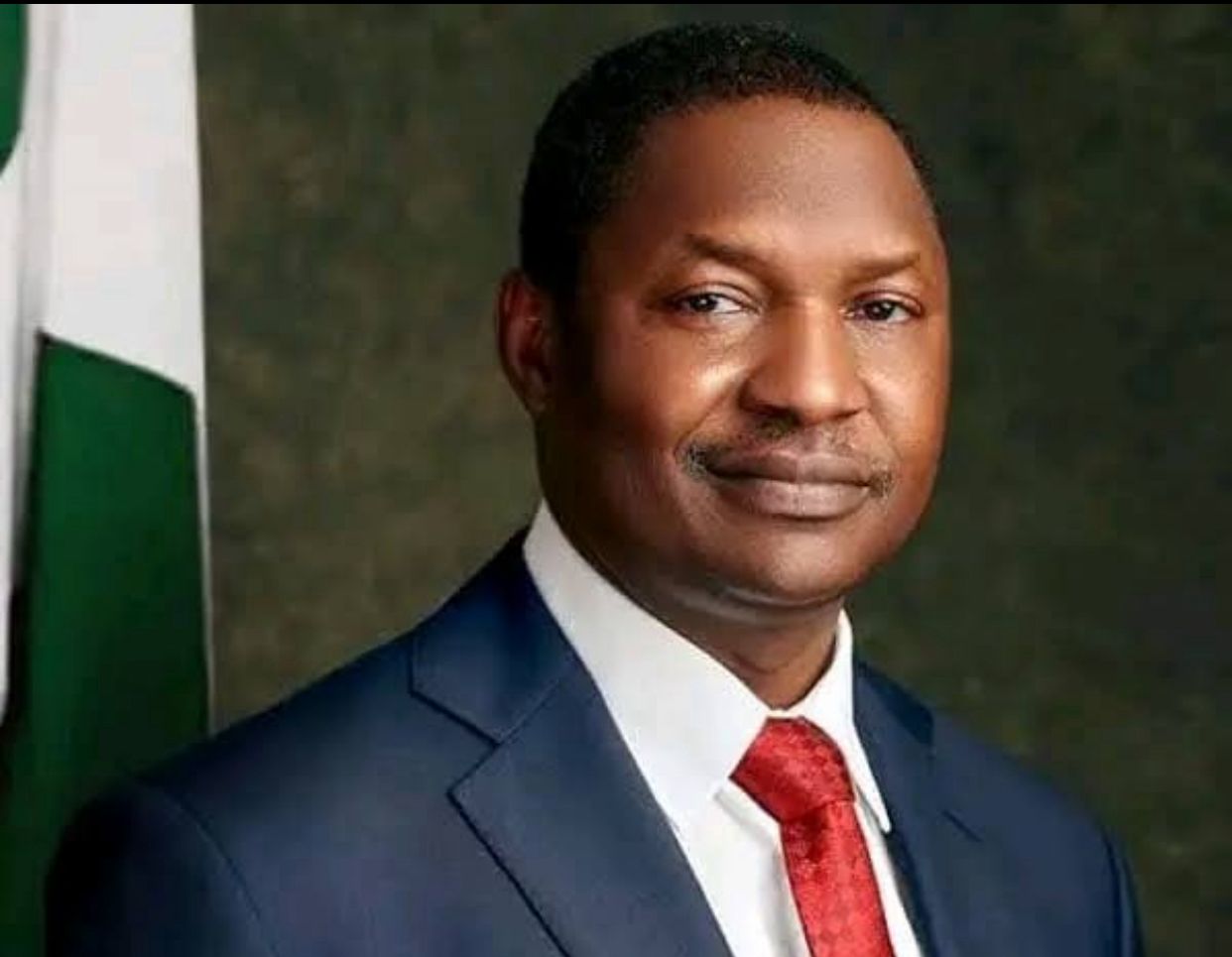
Nigeria’s latest legal drama is headed to the Federal High Court in Abuja as the Economic and Financial Crimes Commission (EFCC) prepares to arraign former Attorney-General of the Federation and Minister of Justice, Abubakar Malami, SAN, on alleged money laundering and unlawful acquisition charges this Tuesday. The anti-graft agency confirmed the news in a phone interview late Monday with its Head of Media and Publicity, Dele Oyewale, who said the arraignment will take place before Justice Emeka Nwite.
“Yes, Malami will be arraigned tomorrow before Justice Emeka Nwite,” Oyewale told reporters, adding that the former AGF will appear from custody.
The EFCC has slapped Malami who served for eight years under former President Muhammadu Buhari along with his son, Abubakar Abdulaziz Malami, and another co-defendant, Hajia Bashir Asabe, with a 16-count indictment alleging that they conspired to disguise and retain proceeds from unlawful activities running into billions of naira. According to the EFCC, these alleged offences include using corporate entities and bank accounts to hide the source of funds, retain large sums as collateral for loans, and acquire properties in key cities like Abuja, Kano, and beyond. The charges are said to breach provisions of the Money Laundering (Prohibition) Act, 2011 (as amended), and the Money Laundering (Prevention and Prohibition) Act, 2022.
While the EFCC moves forward, Malami hasn’t stayed silent. In earlier statements, he accused the agency of ignoring court bail orders and running what he called a “trial by media.”
“Court orders are not advisory. They are binding on all authorities,” Malami’s camp said in a statement, criticizing the continued detention despite court directives. “We’re ready to face due process, but selective briefings to shape public opinion undermine justice,” the statement added. This back-and-forth highlights the tension between the former minister and the EFCC, with observers noting that the case is now as much legal as it is about public perception.
This arraignment follows days of legal wrangling over Malami’s detention and bail status. Though Malami’s lawyers previously argued that a court had granted bail, the EFCC maintained no such order was served creating a murky row that has lingered alongside the main charges. As the case unfolds in Abuja, many Nigerians are watching closely partly because of Malami’s high profile, and partly because the accusations span a decade of public service. The outcome could have significant implications for how senior officials are held accountable in Nigeria’s anti-corruption landscape.


